FROM OUR BLOG
A Bank Employee Was Assaulted. This Keeps Happening.
Apr 14, 2026
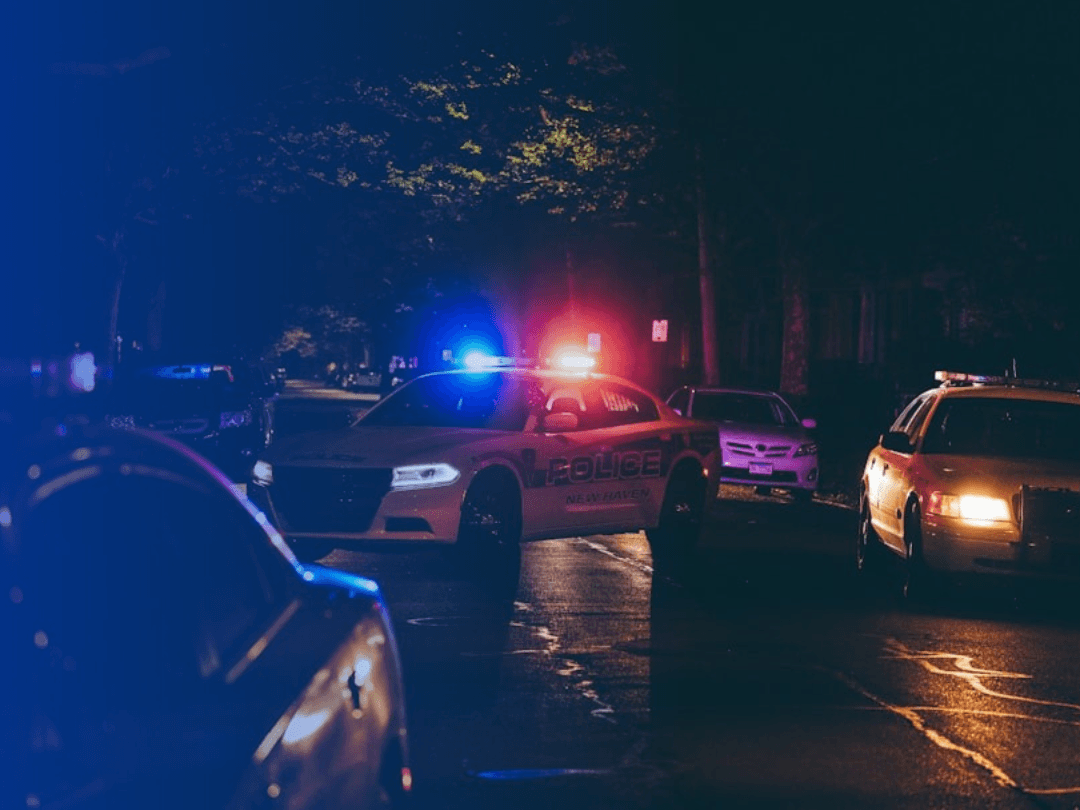
Two weeks ago, at approximately 8 a.m. on April 1, a lone male suspect walked into the Cornerstone Bank branch in Bradshaw, Nebraska — a small town of fewer than 400 people — approached employees behind the counter, and demanded cash. Before he fled in a stolen vehicle, he struck a bank employee in the head. She was taken to the hospital. The same branch had been burglarized by an unknown suspect two months earlier — whether the two incidents are connected remains under investigation.
It took a multi-agency response — the York County Sheriff’s Office, Nebraska State Patrol, York Police Department, Grand Island Police Department, the TRIDENT Task Force, and the FBI — to catch him.
It took one person, walking in at opening time, to put a bank employee in the hospital.
This Isn’t a Big-City Problem
That’s the part of this story that deserves more attention.
Bradshaw, Nebraska. Population 378. The kind of community where the bank branch is woven into the fabric of daily life — where tellers know customers by name, where the branch manager probably grew up nearby. Not a Chase flagship in downtown Manhattan. Not a high-security financial district location with armed guards and biometric access. A small community bank, open at 8 a.m., staffed by people who showed up to do their jobs.
This is where robbery happens too. And increasingly, it’s where institutions are most exposed — because the physical footprint of community banking often means leaner staffing, fewer redundancies, and less immediate access to help when things go sideways fast.
The FBI tracks bank robbery data annually. What it consistently shows is that incidents aren’t soley concentrated in major metros. They’re distributed. Small branches, rural locations, limited-staff openings and closings — these are real risk environments, and they don’t always get the same safety infrastructure investment that larger locations do.
The 8 AM Window
There’s a reason this robbery happened at opening time.
The first few minutes of a branch’s operating day — and the last few minutes before close — are some of the most vulnerable moments in retail banking. Staff are in transition. The physical space is being unlocked and activated. The normal rhythms of a busy branch haven’t kicked in yet. There may be one or two employees on site before anyone else arrives.
This is precisely the window that bad actors target. It’s documented in FBI bank crime data, it’s something that experienced branch security consultants emphasize consistently, and it’s why lone-worker protocols at opening and closing aren’t a nice-to-have — they’re the foundation of branch safety.
The Cornerstone Bank incident happened at 8 a.m. for a reason.
The question every branch manager and regional security director should be sitting with right now isn’t why did this happen in Bradshaw. It’s: what does my 8 a.m. look like?
What “Protocol” Actually Has to Mean
Most financial institutions have some version of an all-clear process. Someone opens the branch, confirms it’s safe, and signals that the day can begin. On paper, this exists almost everywhere.
In practice, it’s executed through a patchwork of methods that range from a phone call to a group text to — still, in 2026 — a paper log. The all-clear process works fine right up until the moment it doesn’t. And in the moments when it doesn’t, the gap between “we have a protocol” and “we have a system that can actually help someone” becomes very real, very fast.
The employee in Bradshaw needed help at 8 a.m. The 911 call and the bank’s internal response happened, and eventually law enforcement arrived. But the gap between incident and response is where harm occurs. That gap is measurable. And it’s closeable.
A real-time, mobile-first check-in system — one where a missed all-clear automatically escalates to the right people, where an employee can trigger a silent alert without drawing attention, where the platform logs every open and close with accountability — doesn’t eliminate the risk of a Bradshaw. But it compresses the response window in ways that can matter enormously.
That’s not a theoretical benefit. That’s the difference between a missed check-in surfacing in two minutes versus two hours.
The Branch That Had Already Been Burglarized
One detail in the Cornerstone Bank case deserves its own paragraph: this was the second incident at the same branch in two months.
The same location had been burglarized in early February. Investigators are still determining whether the two incidents are connected. But the pattern raises a question that should be uncomfortable for any institution: if a branch has already been targeted once, what changes in how that branch operates? What additional protections go in? What signals does the security team watch for?
Repeat targeting of the same location isn’t uncommon. Bad actors assess and return. They look for patterns — in staffing, in timing, in response. The branch that was hit in February should have become a location with elevated awareness protocols by March. Whether that happened in Bradshaw, we don’t know. But the question of whether your institution has a mechanism to elevate monitoring at locations with prior incidents is a question worth answering before you need to.
What This Means for Your Institution Right Now
The Cornerstone Bank robbery isn’t an outlier. It’s a data point in a pattern. Small branches, lean staffing, early-morning windows, and repeat targeting are all documented features of bank crime. And they’re all addressable with the right operational infrastructure.
Here’s what the Bradshaw incident points to specifically:
Lone-worker vulnerability is not a metro problem. Community branches with skeleton morning crews need the same real-time safety coverage as any other location. If your all-clear process depends on a phone call to a manager who might not notice a missed check-in for thirty minutes, that’s a structural gap.
Opening and closing are your highest-risk windows. This isn’t new information — but incident after incident confirms it. If your safety protocols are strongest during regular operating hours and weakest at the margins of the day, you’ve got the coverage inverted.
Repeat incidents require elevated response. A location that has been targeted once should immediately trigger a review of its safety posture and, where warranted, additional monitoring and check-in requirements. Institutions need the operational infrastructure to do that systematically — not just as a one-time conversation after an incident.
Response time is a variable you can control. You can’t control whether someone walks into a branch at 8 a.m. with bad intentions. You can control how quickly the right people know something is wrong. That window is where technology has the most direct impact on outcomes.
The People in the Branch Are Not Statistics
The employee who was injured in Bradshaw went to work on a Wednesday morning to do their job. What happened to them was not the result of inadequate training or poor judgment. It was the result of an environment where the gap between risk and protection was wider than it needed to be.
Financial institutions invest heavily in protecting assets — vaults, cash, digital infrastructure. The ROI conversation for employee safety technology is, in many ways, more straightforward: every dollar spent on proactive safety infrastructure is a dollar that reduces response time, reduces liability, and reduces the very real human cost of an incident.
SaferMobility was built around this calculus. SafeBanker® — our flagship platform for financial institutions — was designed by bankers who understood that the all-clear process, the lone-worker window, and the real-time accountability chain aren’t operational footnotes. They’re the foundation of a branch that can protect its people.
The Bradshaw story ended with an arrest. It didn’t have to end with an employee in the hospital.
SaferMobility serves financial institutions, retail operations, and higher education with unified safety, risk, and mental health platforms. SafeBanker® protects over 20,000 users across 1,600+ locations.